google.com, pub-2774194725043577, DIRECT, f08c47fec0942fa0 L.A.Times Crossword Corner

Advertisements

Feb 5, 2011

Saturday February 5, 2011 Brad Wilber and Doug Peterson

Theme: None

Total words: 68

Total blocks: 27

This puzzle might have started with triple-stacks of 15s on the top and bottom of the grid. Then six extra blocks were added later for smoother fill. Or Brad and Doug just used an existing template and started the way it does.

Anyway, the marquee answers are:

13A. Role for which its actor refused an Oscar : DON VITO CORLEONE. By Marlon Brando. Don Corleone jumped into my mind immediately, not VITO.

16A. Actor who said "Some people have youth, some have beauty—I have menace" : EDWARD G. ROBINSON. Stumper. Did recognize his face when I googled. He's in "The Ten Commandments".

45A. Offended parties in a long-running series of 3-Down : THE GEICO CAVEMEN. This might be the seed entry. And 3D. Show stoppers : TV ADS.

48A. Experience sudden inspiration : HAVE AN "AHA" MOMENT. Great answer.

We also have a symmetrically placed pet pair:

6D. Reward for rolling over : DOG TREAT

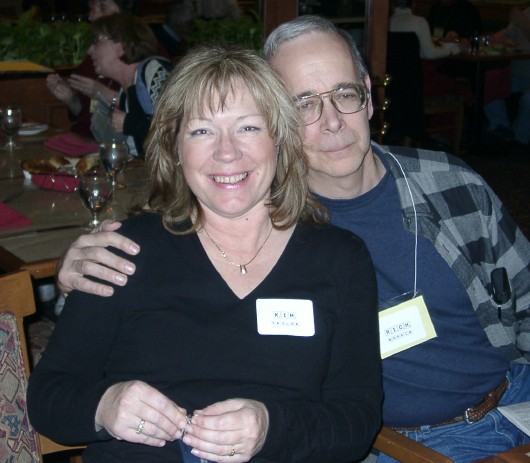
31D. Mrs. Norris in the "Harry Potter" books, e.g. : HOUSE CAT. Not a "Harry Potter" fan. The only Mrs. Norris in my mind is Kim, Rich's wife.

Across:

1. Bumpy, in a way : RUTTED

7. They reflect : MUSERS. Needed extra block for my MIRRORS.

17. General at Cold Harbor : MEADE (George). Oh, the Fort Meade guy. Not aware of his involvement at Cold Harbor.

18. Latish alarm setting : TEN AM

19. Proterozoic, for one : EON. Shouldn't it be ERA?

20. Family title word : OURS

21. Pool feature : DRAIN

22. Have no use for, and then some : HATE. Didn't come to me readily.

23. Use a tap, perhaps : SPY. Wiretap.

24. "We need to talk" : SEE ME. Oh, no.

25. Rage : MANIA

26. On the defensive : AT BAY

27. Put on guard : WARNED

28. Gardener's soil hauler : TIP CART. Spelling check wants this answer to be two words.

31. Impedes : HAMPERS

32. Albéniz piano work : IBERIA. No idea. Wikipedia says Iberia is a suit for piano composed by the Spanish pianist Isaac Albéniz. No wonder the title.

33. Magazine with a "Best Places to Live" feature : MONEY. Boomer used to subscribe this magazine.

34. Gauge : METER

35. Court official's call : FAULT. Tennis court, right?

36. Brief memo nicety : PLS

39. Gym set : REPS (Repetitions)

40. Speciously highbrow : ARTSY

41. Send sprawling : TRIP. And 8. __ sprawl : URBAN. "Sprawl/Sprawling" clechos.

42. Top 10 hit from U2's "Achtung Baby" album : ONE. Here is a clip.

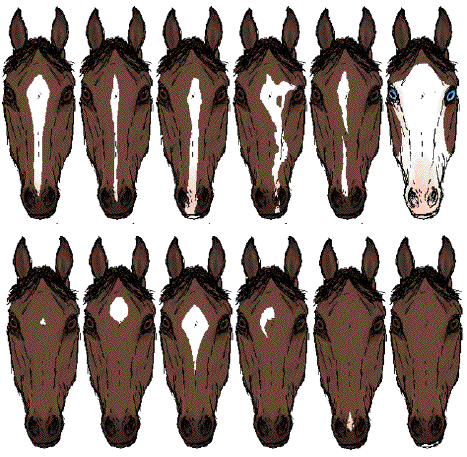
43. Equine facial marking : BLAZE. Dictionary says it's a white area down the center of the face of a horse/cow. New definition to me.

44. "Take __!" : A HIKE

49. Investigates, with "into" : DELVES

50. Airfield fixtures : TOWERS

Down:

1. Didn't stay where it should, as a skirt : RODE UP. Like hers.

2. Not on the ball : UNWARY

4. Spot for studs : TIRE. Was picturing stud earrings.

5. Terminal abbr. : ETD

7. Unificationist : MOONIE. Derived from the name of its founder Sun Myung Moon, who's still alive.

9. Hardly odds-on : SLIM

10. Yet, to Yeats : E'EN. Even.

11. Sitcom about the Conners : ROSEANNE. I've never watched this sitcom. She's too loud.

12. Less likely to mix : SNOOTIER

13. Out-of-the-box models : DEMOS. Got the answer via crosses.

14. Like Twinkies filling : CREAMY

15. Near-decades : ENNEADS. Groups of nine.

21. Messing with a script? : DEBRA. Debra Messing. Great clue.

22. Hideous hybrid of myth : HARPY. Part woman, part bird.

24. It may be winding : STAIR. Tricky clue.

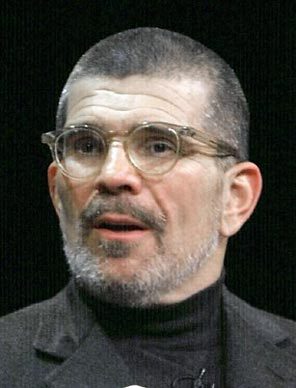
25. "American Buffalo" playwright : MAMET (David). Know him, not the play.

26. Range units : ACRES.

27. Without vigor : WANLY

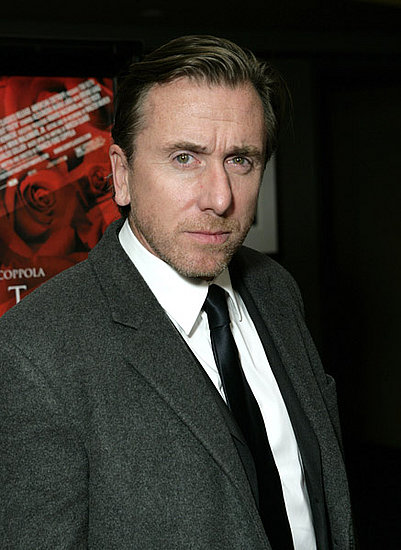
28. "Lie to Me" star : TIM ROTH. Stranger to me. British actor.

29. Patsy's protest : I BEEN HAD

30. Political blog feature, often : PET PEEVE. Crossword blogs, more often.

33. Seder bread : MATZOH. We often see SEDER clued as "Passover feast".

35. Donnybrook : FRACAS. Fun word.

36. Novice's text : PRIMER

37. Compares : LIKENS

38. Wiped out : SPENT

40. 1955 Dior innovation : A-LINE

41. __ park : THEME

43. Theodore, to Wally : BEAV. "Leave It to Beaver".

44. Swear : AVOW

46. Coiffure holder : GEL

47. Te-__: Mexican cigar brand : AMO. Guessable. It's "Robusto", Lois!


C.C.

Feb 4, 2011

Interview with Ed Sessa

There are a few LA Times constructors whose byline always excites me, and Ed Sessa is one of them. His themes are consistently entertaining and always have fun twists. His RAIN CATS AND DOGS is one of my all-time favorites.

Ed had his first puzzle published by the NY Times in 2007, since then, he has had a total 20 puzzle published by the NY Times and LA Times. I asked Ed a few questions, and was very delighted by his prompt and informative answers.

What's your background and how did you get into crossword construction?

I’m a pediatrician living in upstate New York. Although it was all science in med school, my undergraduate education at Regis and Holy Cross was a Jesuit one, emphasizing English (my major), classical Latin and Greek language, grammar, writing etc. I think that developed in me a great fascination with the flexibility and nuances of our language. Over the years I wrote puzzles (mostly cryptics) for local publications and clubs, and even had a few tries with Eugene Maleska (thumbs very much down). In 2007 I submitted a puzzle to Will Shortz and was invited to resubmit it with one theme entry change. The final acceptance was an indescribable feeling, to be felt again when Rich Norris accepted my first puzzle for the LAT a bit later. Thanks to them both for their openness to new constructors.

There is often something nicely unexpected about your themes. The recent DO BE DO BE DO and RAIN CATS AND DOGS in 2009 come to mind. What kind of themes/fill do you prefer and what kind do you try to avoid?

I try to develop themes with humor and surprise, what some might call an “aha” moment, even if one might have to look at the finished puzzle for a minute or two to figure that out. However there’s a catch here: on one extreme is a puzzle where once one or two theme entries are filled, the others can be surmised without having to work the crosses. Then a solver has little motivation to complete the puzzle. On the other extreme is the puzzle where many solvers have no “clue” to what the puzzle is all about even after completing everything. Not everyone consults a blogger to find out what’s going on in a puzzle and that’s one unsatisfied solver! To me, either extreme is a failure on the constructor’s part and I’ve felt bad to read that a solver had no idea what my puzzle was all about. The same goes for fill and clueing: we all try for fresh words and phrases (“sparkle” as Manny N. would say) and new ways to clue familiar words (what new can one say about “aloe”) but all too often that can lead to obscurities or clueing that is a little “too clever”, an “inside joke” to sort of speak. That’s where a good editor steps in to troubleshoot themes, fills, and clues. Although you can’t make a silk purse out of a sow’s ear, editors can make constructors look pretty good. It really is a team undertaking.

Which part do you normally spend the most time on, in the construction process: theme brainstorming, gridding or cluing?

There are enough computer programs out there to almost equalize the playing field for gridding and filling so coming up with a fresh, new theme is by far the most difficult. There are a lot of people out there working on crossword themes so there will be a lot of repetition. I had a KISS theme ready to go the same day Donna Levin’s wonderful crossword appeared in the LA Times with the same theme (I think we must be somehow related after the Jan. 5th “Mr. Ed” NYT/LAT dupe). Here one has to do the best one can and the key I feel is to develop the ability to be self-critical. After a couple of published crosswords, I went through a long string of rejections. I credit Nancy Salomon for driving home the point, in her own inimitable way, that one has to constantly be one’s own best critic-throw out a puzzle with two great entries but one “iffy” one, start from scratch if something’s not right. Even so, I still get my share of rejections, but sometimes one editor will like immensely what another editor has rejected, just as some bloggers/solvers who share their feelings on the web pro or con. One can better deal with this disparity if one is satisfied that he or she has put out the best product one can.

What kind of reference books/websites do you use for theme entry selection assistance and clue accuracy checks?

I use predominantly the RHUD, Roget’s Thesaurus, OneLook Dictionary Search and Wikipedia online. I also use Matt Ginsberg’s clue database and the Cruciverb database, mostly to see if a clue has been used before. That’s not always easy to do, and I don’t feel bad using a good clue if I at least came up with that clue independently

You've been quite productive since you had your first puzzle with the NY Times in 2007, total ten NY Times & ten LA Times, four of them are big Sundays. Where do you find your theme inspirations and how do you maintain such productivity and originality?

Most of my theme ideas come to me while walking my dog, or strangely enough before falling asleep at night (a sure recipe for insomnia). I think there are many theme types and techniques one can use. For two examples: 1. A title or punch line phrase presents itself and one tries to find a puzzle there e.g. I heard the Sinatra line “dobedobedo” on the radio and (after annoying my wife for days singing it) thought of a way to get it into a puzzle. There it was: 4 homophones for “do” and three for “be”, and the possibility for symmetry to boot – a cruciverbalist’s nirvana! 2. A common idiom comes to mind that can be interpreted differently, sliced and diced, or treated concretely as in “RAINCATSANDDOGS” or Joe Krozel’s nice “ONAGAINOFFAGAIN” puzzle. How do I maintain “productivity”? Nothing of any practical importance gets done around the house on time (!).

What kind of puzzles do you solve every day and which constructors do you find most inspiring?

I like to do the NY and LA Times puzzles and the Chronicle of Higher Education. Manny Nosowsky, with his ear for idioms, colloquialisms, and similar word sounds and awesome clueing, is of course the very best. And who didn’t admire Dan Naddor’s incredible ability to construct grids with such high theme content PLUS great fill. Some puzzles still resonate for me e.g. Peter Collins’ “Three-l llama puzzle” and Nancy Salomon/Harvey Estes’ “Tarzan” puzzle. But my favorite constructors are Cox and Rathvon, because my favorite type of puzzle is the cryptic puzzle. I’ve done just about every one of their Atlantic puzzles over the decades. With cryptics, the emphasis is on wordplay and less on information that one might or might now know. And no need for much structural crosswordese.

Besides crosswords, what else do you do for fun?

I spend part of the winter on Sanibel Island, where I fish a lot, golf a little, garden, and volunteer with the Ding Darling Wildlife Refuge. For the past twenty years I’ve enjoyed birding as well as carving birds and decoys. And of course the most fun is being with my wife and dog and as often as I can my three children and one grandchild.